
Accurate & Efficient Accounting & Bookkeeping Services
We provide precise and reliable accounting and bookkeeping solutions to ensure seamless financial management, compliance, and informed decision-making for businesses of all sizes.rnrnMany small businesses, start-ups, and entrepreneurs find it extremely challenging to manage their accounting records and keep their finances updated. Our Team have huge arrays of options for skilled & experienced accountants/bookkeepers that are qualified and affordable at the same time. You can hire the accountant that is best suited to your needs and the firm’s growth and development.rnrnOur staff is very well equipped with the entire bookkeeping/accounting process starting from recording the transactions to preparing periodic financial statements.rnrnWe have set up processes to automate entire bookkeeping processes for our clients including

How we do it
- Gathering all information such as bank statements, credit card statements, invoices, bills, deposit slips, canceled checks, and so on
- Recording transactions and coding them into a general ledger
- Prepare a list of open items that require additional information/clarification from the clients
- Prepare and record adjustments to finalize books periodically Prepare periodic financial statements and corresponding work papers to facilitate the overall review process
- Proactively sending reminders for various due dates of compliances like estimated federal tax payments, sales tax payments, payroll tax payments & so on.
Our Monthly Accounting Services

Bookkeeping Services

Financial Statement Preparation

GST Compliance:

TDS Compliance
Management Reporting
Advisory Services
Hire a World Class Tax Consultants
Reobiz donec pulvinar magna id leoersi pellentesque impered dignissim rhoncus euismod euismod eros vitae.
10+ Years of Experience

What Saying Customers
CA Yash Garg offers tailor-made solutions for our complex financial structures. Their team responsiveness and clarity in guidance stand out. Excellent professionals for financial institutions.

Rahul Deshpande
The team’s support in financial planning and compliance has been invaluable to our startup’s success.
Vikram Singh
CA Yash Garg offers outstanding service in tax advisory and reporting. Their understanding of insurance compliance is sharp and timely. Highly reliable professionals!
Vivek Shah
CA Yash Garg handles our taxation and statutory compliance with great professionalism. Their experience with insurance regulations is evident in their work
Karan Dua
Their firm experience with government finance is evident in every consultation. Strategic, clear, and efficient services that deliver real value to public institutions.

Sunita Rao
Their in-depth knowledge of industrial finance has been a cornerstone in our strategic planning, helping us achieve fiscal stability and growth.
Meena Iyer
The team’s expertise in handling GST and other regulatory compliances has been instrumental in our seamless operations.
Priya Nair
CA Yash Garg financial strategies have significantly improved our operational efficiency. Their precision in tax planning and corporate advisory made a measurable impact on our profitability. Highl…
Arjun Mehta
CA Yash Garg expertise in international trade finance has streamlined our import-export operations, ensuring compliance and efficiency.
Rajiv Sinha
From GST to payroll, Yash Garg firm handles all our accounting needs efficiently. We seen significant improvements in cash flow and reporting accuracy.
Deepak Menon
Frequently Asked Questions
- Individuals whose total income exceeds the basic exemption limit (Rs. 2.5 lakh for individuals below 60 years)
- Hindu Undivided Families (HUFs) and individuals engaged in business or professional activities.
- Companies or corporate entities.
- Partnership firms (including LLPs) and trusts.
- Tax evasion is the illegal act of deliberately avoiding paying taxes by underreporting income, inflating expenses, or hiding money. It is punishable under the law.
- Tax avoidance is the legal practice of minimizing your tax liability by using provisions in the tax laws, like tax-saving investments, deductions, and exemptions.
Stay Informed with Expert Insights
Explore expert insights, tax updates, financial news, and business strategies to stay ahead in the ever-evolving financial world.
Read more
Section 8 Company vs Trust vs Society – W…
Starting an NGO in India is a noble step – but choosing the wrong le…
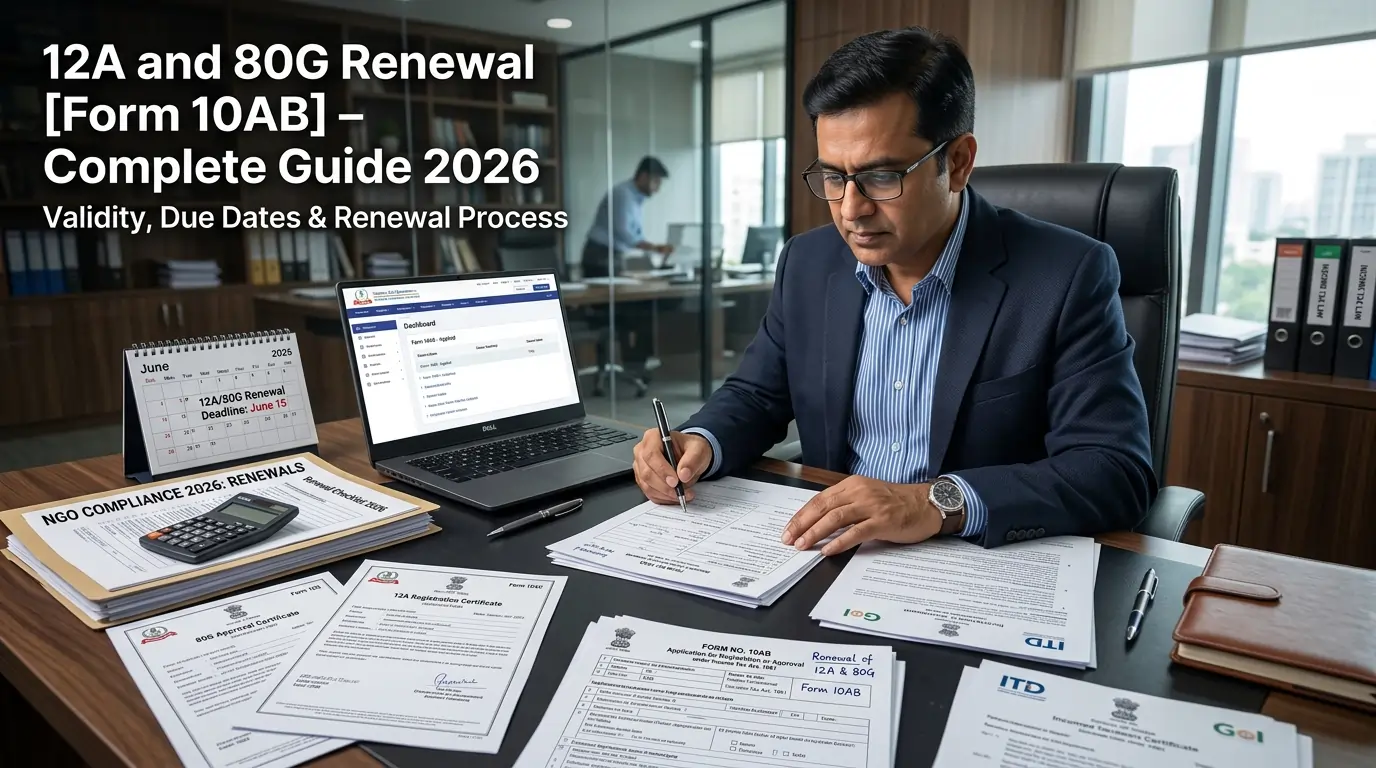
12A and 80G Renewal [Form 10AB] – Complet…
12A and 80G renewal requires NGOs to file Form 10AB on the income tax e-filing portal – at least 6 months before registrat…

GST Refund for Exporters India: Complete Proces…
If you’re an exporter based in India, you’ve probably heard the term GST refund for exporters India more times than you ca…
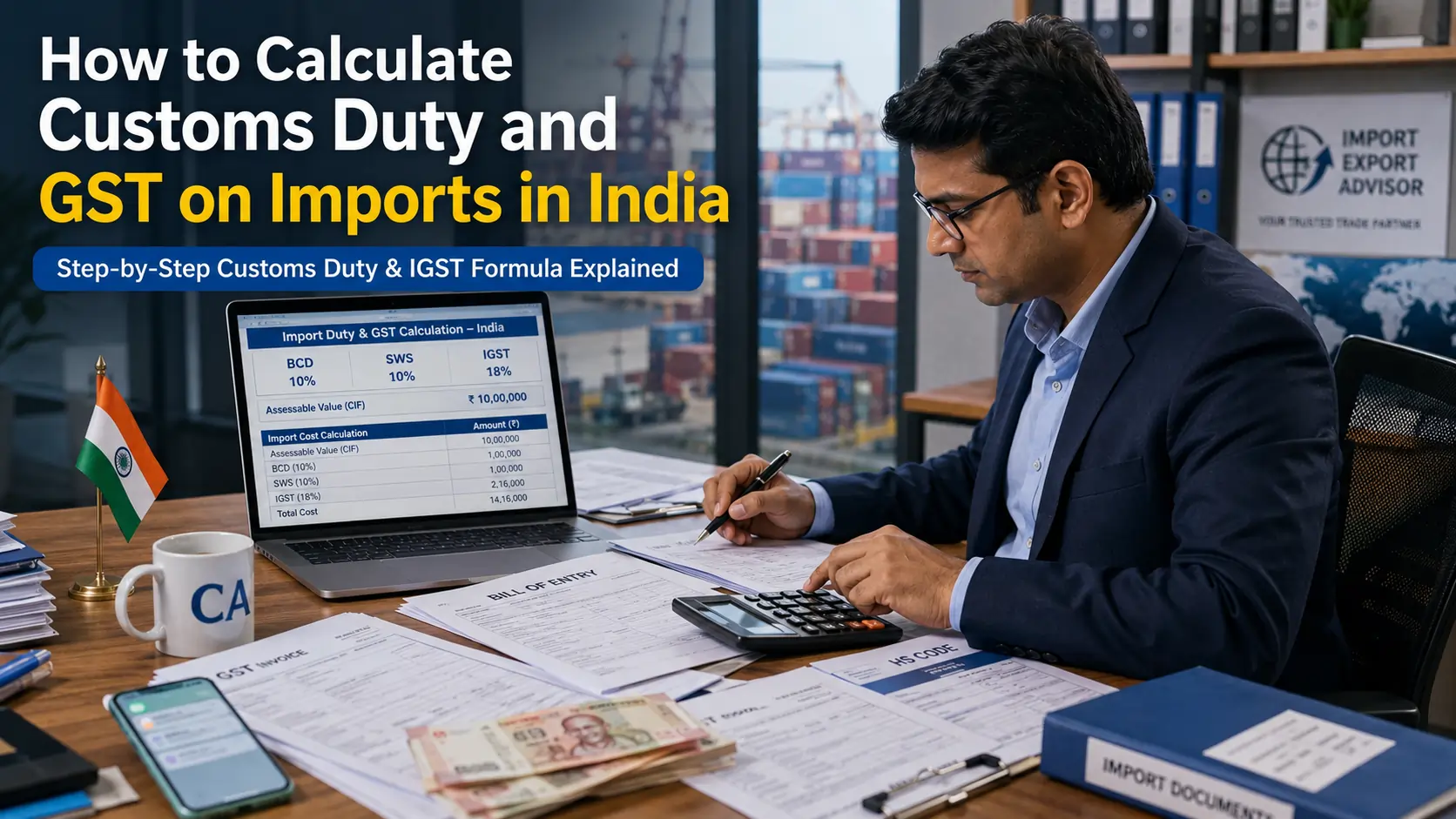
How to calculate customs duty and GST on import…
If you have ever wondered how to calculate customs duty and GST on imports in India – you are not alone. Most importers, e…

IEC Registration in India 2026 – Complete…
So you want to start exporting from India – or maybe you’ve already begun and someone just told you that you need an “IEC….

How to Start Export Business in India 2026
IEC Registration, DGFT Compliance, GST Refund & Government Incentives – Complete Guide. India is one of the fastest-gr…
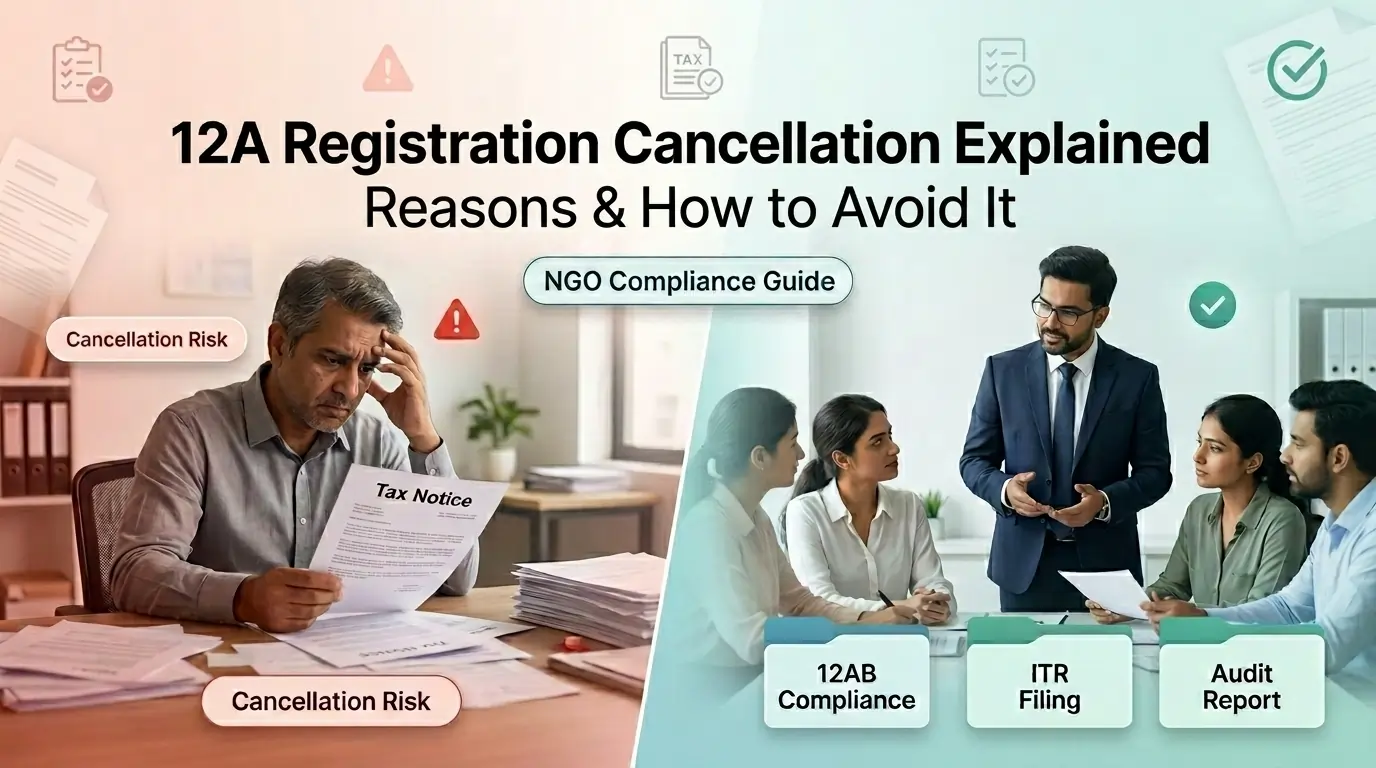
When Can 12A Registration Be Cancelled?Reasons …
A question we hear very often is: “when can 12A registration be cancelled by the income tax department?” The answ…
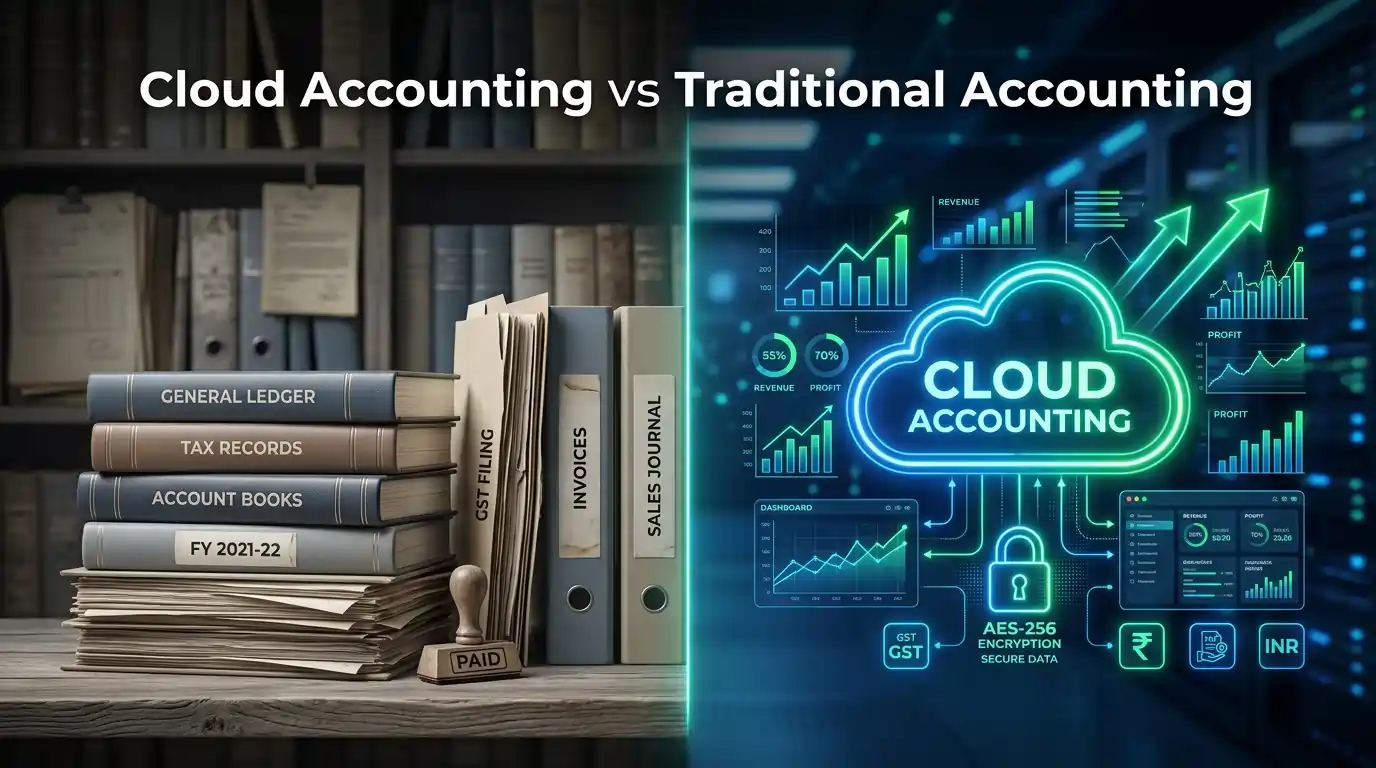
Cloud Accounting vs Traditional Accounting: Whi…
The Accounting Revolution Happening Right Now in India
If you run a s…
When Should a Business Outsource Accounting?
Running a business in India is no small feat. Between managing operations, serving customers, and driving growth, outsourc…

FEMA Compliance for Indian Businesses Receiving…
Every month, thousands of Indian businesses, freelancers, and startups receive payments from international clients. Some o…

Phone Number

Email Address

Office Address
43, Om Shiv Nagar, Nayapura, Lalghati, Bhopal, Madhya Pradesh, 462001