Business Setup in India: Complete Guide to Company Registration & Legal Compliance
Starting a business in India has become easier than ever. With digital registration systems, startup-friendly policies, and growing market opportunities, many entrepreneurs are launching new companies every year. However, business setup in India still requires proper planning, legal registration, and compliance with government rules.
If you want to start a business in India, you need to understand the registration process, required documents, business structures, and tax regulations. Choosing the right structure and completing the correct registrations helps avoid legal problems and builds credibility for your company.
In this guide, we will explain how to start a business in India, the company registration process in India, required licenses, compliance requirements, and the cost involved. Whether you are a startup founder, small business owner, or investor, this article will help you understand everything about business registration and compliance in India.
What is Business Setup in India?
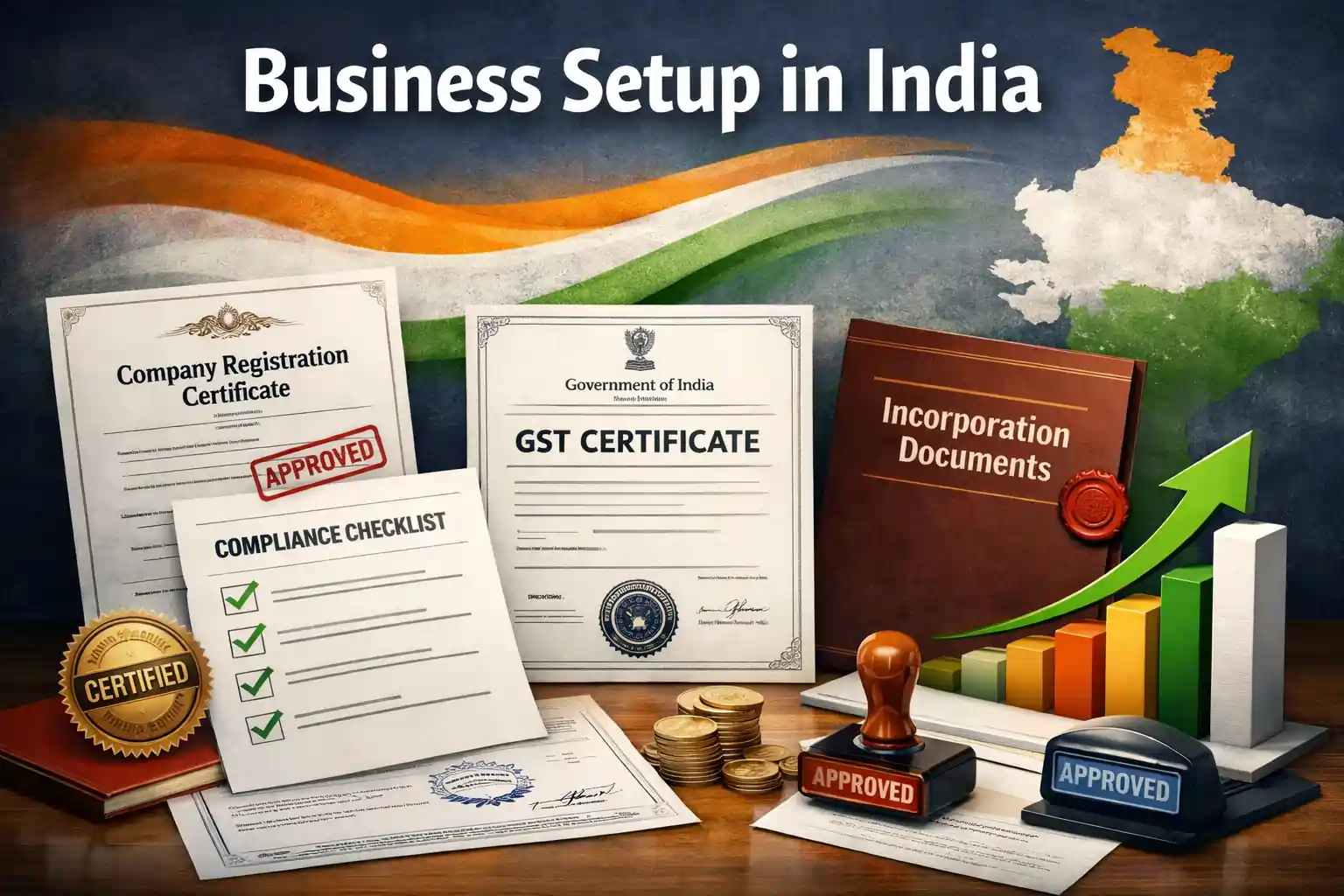
Business setup in India refers to the legal process of establishing a company or enterprise so it can operate officially under Indian laws. It involves registering the business with government authorities, obtaining tax registrations, and completing regulatory requirements.
In simple terms, business setup includes:
- Selecting the right business structure
- Registering the company with the government
- Obtaining tax registrations such as PAN, TAN, and GST
- Getting required licenses and permits
- Maintaining ongoing business compliance in India
Once these steps are completed, the business becomes legally recognized and can operate professionally.
What Does “Business Setup” Actually Mean?
When people talk about business registration in India, they usually refer to several legal steps that create a formal company.
These steps include:
- Company incorporation with the Ministry of Corporate Affairs
- Tax registrations such as GST and PAN
- Business bank account setup
- Compliance with government regulations
Business setup is not only about registration. It also includes financial compliance, tax filings, and legal reporting requirements that businesses must follow every year.
Why Business Registration is Important in India
Many small businesses start informally, but operating without registration can create problems later. Proper company registration in India provides several benefits.
Some important reasons include:
- Legal recognition of the business
- Better trust among clients and investors
- Easier access to bank loans and funding
- Protection of business name and brand
- Eligibility for government schemes
Proper registration also ensures that your company follows the legal requirements to start a business in India, which reduces the risk of penalties and compliance issues.
Also Read - Audit and Assurance Services in India: Complete Guide for Businesses
Did You Know?
India has become the third-largest startup ecosystem in the world, with thousands of startups registering every year through government initiatives like Startup India.
Why Start a Business in India?
India has become one of the fastest-growing startup ecosystems in the world. The country offers a large consumer market, digital infrastructure, and government support programs that encourage entrepreneurship.
Because of these opportunities, many founders choose to start a business in India.
Growth of Startup Ecosystem in India
India now has thousands of startups across industries like technology, healthcare, education, and e-commerce. Cities such as Bengaluru, Mumbai, Delhi, and Hyderabad have become major startup hubs.
Government initiatives such as Startup India registration provide benefits including tax exemptions, funding support, and easier regulatory processes.
This growth has made startup registration in India more popular among entrepreneurs.
Government Initiatives Supporting Startups
Several government programs help new businesses grow.
Important initiatives include:
- Startup India Scheme
- MSME / Udyam Registration
- Digital India initiatives
- Tax benefits for startups
These programs reduce compliance burdens and help businesses access financial support.
Opportunities for Entrepreneurs and Investors
India offers strong opportunities because of:
- Large population and growing demand
- Expanding digital economy
- Increasing online businesses
- Supportive government policies
For these reasons, both domestic and international entrepreneurs are interested in company incorporation in India.
Types of Business Entities in India (Which Structure is Best?)
Before registering a company, entrepreneurs must choose the right business structure in India. Each structure has different legal requirements, ownership rules, and compliance obligations.
Understanding the types of business entities in India helps you choose the most suitable option.
| Business Structure | Best For | Liability |
| Sole Proprietorship | Small businesses | Unlimited |
| Partnership Firm | Two or more owners | Unlimited |
| LLP | Professional services | Limited |
| Private Limited Company | Startups and scalable businesses | Limited |
| One Person Company | Single entrepreneur | Limited |
Sole Proprietorship Registration in India
A sole proprietorship is the simplest business structure. It is owned and managed by one person.
Features include:
- Easy to start
- Low registration cost
- Full control by the owner
However, the owner has unlimited liability, meaning personal assets may be used to pay business debts.
Partnership Firm
A partnership firm is owned by two or more partners who share profits and responsibilities.
Important features include:
- Partnership agreement between partners
- Shared investment and profits
- Moderate compliance requirements
Limited Liability Partnership (LLP)
An LLP registration process in India combines features of partnership and company structures.
Benefits include:
- Limited liability protection
- Separate legal identity
- Lower compliance compared to companies
LLPs are popular among professionals such as consultants, lawyers, and service firms.
Private Limited Company Registration
A private limited company registration in India is one of the most common structures for startups.
Advantages include:
- Limited liability for shareholders
- Separate legal identity
- Easier fundraising from investors
- Higher credibility with clients
Because of these benefits, many startups choose the private limited company registration process in India.
One Person Company (OPC)
A One Person Company (OPC) allows a single entrepreneur to run a company with limited liability. This structure is ideal for individual founders who want the benefits of a company without multiple partners.
Which Business Structure is Best in India?
The best structure depends on your business goals.
For example:
- Small businesses may choose sole proprietorship
- Professional firms often choose LLP
- Startups looking for investors usually choose private limited companies
Choosing the right structure is one of the most important decisions when planning business setup in India.
Also Read - What is Bookkeeping and why every business need it? (2026 Guide)
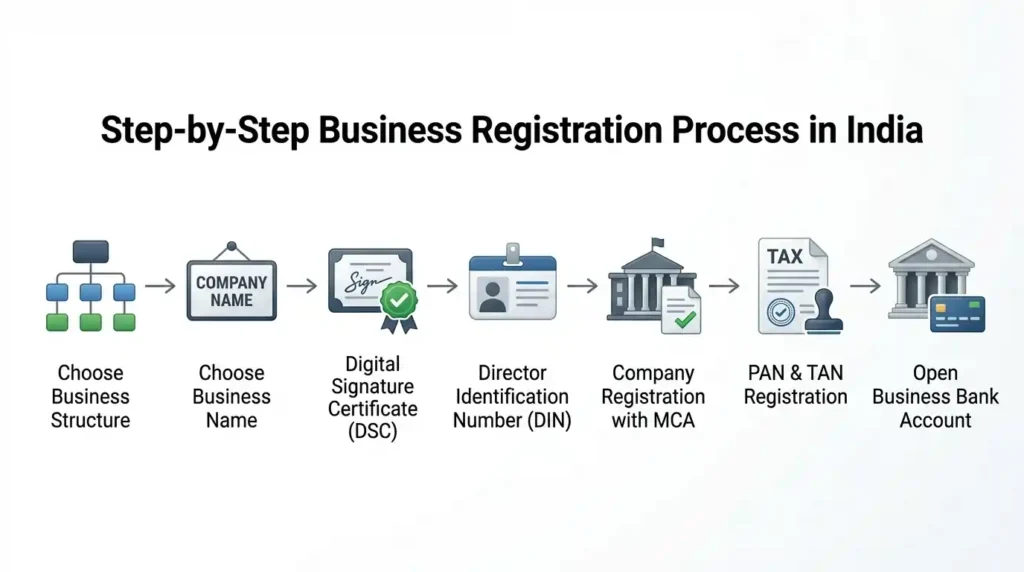
Step-by-Step Business Registration Process in India
The business registration process in India involves several legal steps that must be completed before a company can start operating. Most of these registrations are done through the Ministry of Corporate Affairs (MCA) portal, which manages company incorporation and compliance in India.
Step 1 - Choose the Right Business Structure
The first step in business registration is selecting the correct business structure for your company. Options include sole proprietorship, partnership, LLP, and private limited company.
Your choice of structure affects taxation, ownership rights, funding opportunities, and compliance requirements. For example, startups often choose a private limited company because it offers limited liability and better investment opportunities.
Step 2 - Choose a Unique Business Name
After selecting the business structure, you must choose a unique company name that represents your brand and business activity. The name must be approved by the Ministry of Corporate Affairs (MCA) before the company can be registered.
The proposed name should follow MCA naming guidelines and must not be similar to any existing registered company or trademark.
Step 3 - Obtain Digital Signature Certificate (DSC)
A Digital Signature Certificate (DSC) is required for submitting company registration forms online. Since most registration processes are completed digitally through the MCA portal, the DSC acts as an electronic signature for official documents.
Directors and authorized signatories of the company must obtain this certificate to securely sign and file documents during the registration process.
Step 4 - Apply for Director Identification Number (DIN)
A Director Identification Number (DIN) is a unique identification number issued by the government to individuals who wish to become company directors in India.
Every director of a company must obtain a DIN before incorporation. This number helps the government track and regulate individuals involved in company management.
Step 5 - Company Registration with MCA
The company is officially incorporated through the Ministry of Corporate Affairs portal.
This process includes:
- Submission of company documents
- Verification by authorities
- Approval of company incorporation
Once approved, the business receives a Certificate of Incorporation.
Step 6 - PAN and TAN Registration
After company incorporation, businesses must obtain:
These are necessary for taxation and financial transactions.
Step 7 - Open a Business Bank Account
Once the company is registered, a business bank account should be opened to manage financial transactions.
Also Read - Outsourced Accounting Services for SMEs and Startups in India
Did you know?
India allows 100% online company registration through the Ministry of Corporate Affairs portal. Many businesses can complete their registration process within 7-10 working days if documents are correct.
Documents Required for Company Registration in India
To complete company registration in India, certain documents are required.
Identity Proof Documents
Common identity documents include:
- PAN card
- Aadhaar card
- Passport (for foreign directors)
Address Proof Documents
Examples include:
- Utility bill
- Bank statement
- Driving license
Business Address Documents
Businesses must provide proof of office address such as:
- Rent agreement
- Property ownership document
- Utility bill
Additional Documents for Different Business Structures
Some structures may require additional documents such as:
- Partnership deed
- Memorandum of Association (MOA)
- Articles of Association (AOA)
Business Licenses and Registrations Required in India
In addition to company registration, businesses may require other licenses and registrations.
GST Registration Process
The GST registration process is required if your business exceeds the turnover threshold or sells goods/services across states.
GST registration allows businesses to:
- Collect tax legally
- Claim input tax credit
- Operate in multiple states
MSME / Udyam Registration
MSME registration in India provides benefits for small businesses.
Benefits include:
- Easier bank loans
- Government subsidies
- Protection against delayed payments
Startup India Registration
Startup India registration benefits include:
- Tax exemptions
- Access to government funding
- Simplified compliance requirements
Industry-Specific Licenses
Some industries require special licenses.
Examples include:
- FSSAI license for food businesses
- Import Export Code (IEC) for international trade
- Shop and Establishment License
Did you know?
Many startups in India qualify for tax benefits and funding support under government programs like Startup India and MSME schemes.
Legal Compliance for Businesses in India
After completing company registration in India, businesses must follow certain legal and financial compliance requirements. These rules ensure transparency, proper taxation, and smooth business operations. Following the required business compliance in India also helps companies avoid penalties and maintain a good legal standing.
Annual ROC Filings
All registered companies must file annual returns with the Registrar of Companies (ROC) under the Ministry of Corporate Affairs. These filings include financial statements, company details, and information about directors and shareholders. Regular ROC filings help the government maintain accurate records of company operations and ensure regulatory compliance.
GST Filing Requirements
Businesses registered under the Goods and Services Tax (GST) system must file GST returns either monthly or quarterly, depending on their turnover and registration type. These returns report the sales, purchases, and tax collected by the business. Timely GST filing helps maintain tax transparency and prevents penalties or interest charges.
Income Tax Compliance
Every company operating in India must file annual income tax returns based on its profits and financial records. Businesses must also comply with corporate tax rules and report accurate income details to the Income Tax Department. Proper tax compliance ensures that the business operates legally and avoids tax-related issues.
Accounting and Bookkeeping Requirements
Maintaining proper accounting and bookkeeping records is essential for every business. Accurate financial records help track business performance, prepare financial statements, and meet tax and audit requirements. Well-maintained accounts also help business owners make better financial decisions.
Businesses must maintain records such as:
- Revenue and expense details
- Financial statements like balance sheets and profit reports
- Tax invoices and compliance records
Cost of Starting a Business in India
The cost of starting a business in India depends on the type of business structure and professional services used.
Typical costs include:
- Government registration fees
- Professional consultant or CA fees
- Legal documentation expenses
- Compliance and accounting costs
In many cases, the minimum capital required to start a company in India is quite low, especially for startups.
Also Read - Accounting and Bookkeeping Services in India: Complete Guide for Businesses
How Long Does Company Registration Take in India?
The company registration process in India typically takes around:
- 7 to 10 working days for private limited companies
- 5 to 7 days for LLP registration
However, the timeline may vary depending on document verification and government approvals.
Can Foreigners Start a Business in India?
Yes, foreigners can start a business in India under certain regulations.
Foreign investors can set up:
- Compliance with Foreign Direct Investment (FDI) policies
- Company registration under Indian laws
- Tax and regulatory compliance
However, they must follow Foreign Direct Investment (FDI) rules and regulatory guidelines.
Common Mistakes to Avoid When Starting a Business in India
Many new entrepreneurs make small mistakes during the early stages of business setup in India. These mistakes may seem minor at first, but they can create legal, financial, and operational problems later. Understanding these common issues can help business owners start on the right path and avoid unnecessary complications.
Choosing the Wrong Business Structure
Selecting the wrong business structure can affect taxes, liability, and future growth. For example, a sole proprietorship may work for a small local business, but it may not be suitable for startups planning to raise funding. Entrepreneurs should carefully choose between options like sole proprietorship, LLP, or private limited company based on their long-term goals.
Ignoring Compliance Requirements
Many businesses focus only on registration and forget about ongoing business compliance in India. Companies must regularly file tax returns, GST returns, and annual ROC filings depending on their structure. Ignoring these requirements can lead to penalties, legal notices, or even suspension of business operations.
Incomplete Documentation
Company registration requires several documents such as identity proof, address proof, and business address verification. Submitting incorrect or incomplete documents can delay the company registration process in India and sometimes lead to application rejection. Ensuring all paperwork is accurate and verified helps avoid unnecessary delays.
Lack of Tax Planning
Proper tax planning is important for managing business finances. Without planning, businesses may pay higher taxes or face compliance issues later. Consulting a professional or understanding tax obligations such as GST registration and income tax compliance can help entrepreneurs save money and operate smoothly.
Avoiding these mistakes helps ensure smooth business setup in India.
Company Registration and Business Setup Services in India
Many entrepreneurs prefer to use business setup services in India provided by professional consultants.
These services help with:
- Company incorporation
- Tax registrations
- legal documentation
- compliance management
Professional support makes the process faster and reduces the risk of errors.
Business Setup Services in Bhopal
Entrepreneurs in Madhya Pradesh often seek company registration services in Bhopal to simplify the process.
A local chartered accountant for business setup in Bhopal can assist with:
- company incorporation
- GST registration
- tax planning
- compliance filings
Working with experienced professionals ensures proper documentation and smooth business operations.
Also Read - Benefits of Hiring an Outsourced Accountant
FAQs on Business Setup in India (People Also Ask)
What are the steps to start a business in India?
Starting a business in India involves a few important steps. First, you need to choose the right business structure such as a sole proprietorship, LLP, or private limited company based on your business goals. After that, the company must be registered with the appropriate government authority, followed by obtaining tax registrations like PAN, TAN, and GST if required. Finally, opening a business bank account and completing basic compliance requirements will allow the business to operate legally.
Which business structure is best in India?
The best business structure depends on factors such as the size of the business, number of owners, and future growth plans. For example, startups that want investment and scalability usually prefer private limited companies because they provide limited liability and better credibility. On the other hand, small businesses and freelancers often choose sole proprietorship or LLP structures because they are easier to manage and require fewer compliance formalities.
What documents are required for company registration in India?
The documents required for company registration generally include identity proof and address proof of directors or owners, such as PAN card, Aadhaar card, or passport. In addition, the business must provide registered office address proof, which can include a rental agreement, utility bill, or property ownership documents. These documents help verify the identity of the promoters and confirm the official location of the business.
Is GST mandatory for new businesses in India?
GST registration is not mandatory for every business at the start. It becomes compulsory when the annual turnover crosses the government threshold limit or when a business sells goods or services across state borders. Some specific industries and e-commerce businesses may also require GST registration even if their turnover is lower.
How much does it cost to register a company in India?
The cost of company registration in India varies depending on the type of business structure, government filing fees, and professional service charges. For example, registering a private limited company usually costs more than starting a sole proprietorship because it involves additional legal documentation and compliance steps. However, overall registration costs are generally affordable for most entrepreneurs starting a new business.
Conclusion
Setting up a company requires careful planning and understanding of legal procedures. The business setup in India process involves selecting the right structure, completing company registration, obtaining licenses, and maintaining compliance.
Entrepreneurs who understand the company registration process in India and follow proper compliance guidelines can build a strong and legally secure business.
Whether you are launching a startup, expanding a company, or investing in India, proper registration and compliance will help your business grow successfully in the long run.