
Audit and Assurance Services in India: Complete Guide for Businesses
Running a business in India involves many financial responsibilities. Companies must maintain accurate records, follow tax laws, and ensure their financial statements are reliable. This is where audit and assurance services in India become important for businesses of all sizes.
Audit and assurance services help businesses review their financial records, verify transactions, and maintain transparency. These services are usually provided by qualified chartered accountants who evaluate whether financial statements present a true and fair view of the company’s financial position.
For startups, small businesses, and large corporations, professional audit services for businesses help build trust with investors, regulators, and stakeholders. They also help companies identify risks, improve internal controls, and ensure compliance with laws like the Companies Act and Income Tax regulations.
In this guide, we will explain everything businesses need to know about audit and assurance services, including their meaning, types, process, benefits, and when they are required in India.
What Are Audit and Assurance Services?
Audit and assurance services are professional services that examine a company’s financial records and operations to confirm that everything is accurate, compliant, and transparent.
An audit mainly focuses on checking financial statements, accounting records, and transactions to ensure they are correct and follow accounting standards.
Assurance services, on the other hand, provide confidence that the financial information or processes used by a company are reliable and trustworthy.
Businesses often rely on these services to ensure financial statement audit accuracy, improve financial reporting, and maintain proper compliance.
Key aspects of audit and assurance services include:
- Verification of financial statements
- Review of accounting records
- Evaluation of internal financial controls
- Identification of risks and compliance gaps
- Ensuring financial transparency for companies
For businesses, these services act as an independent verification process that builds confidence among investors, lenders, and government authorities.
Also Read - Accounting and Bookkeeping Services in India: Complete Guide for Businesses
Did You Know?
Many investors and financial institutions rely on independent financial verification before approving loans or investments. A properly conducted audit can increase business credibility and make it easier to secure funding.
Why Do Businesses Need Audit and Assurance Services?
Businesses operate in a complex financial and regulatory environment. Without proper checks, errors or compliance issues can lead to financial losses or legal penalties.
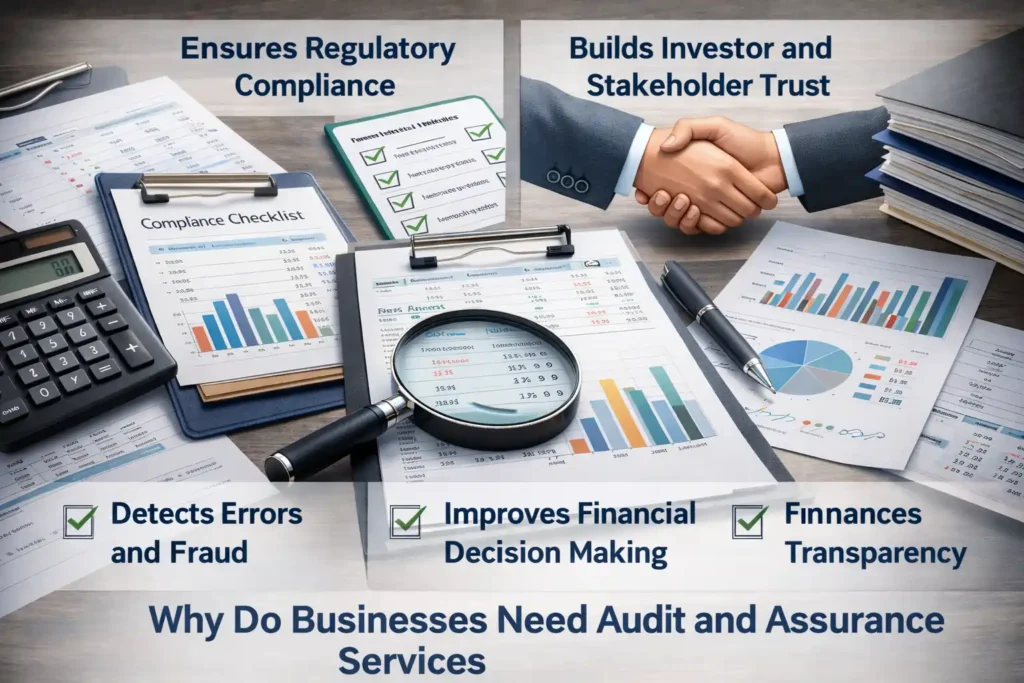
This is why audit and assurance services for businesses play a crucial role in maintaining financial health and transparency.
1. Ensures Regulatory Compliance
Companies in India must follow multiple laws, including:
- Companies Act 2013
- Income Tax Act
- GST regulations
Professional audits help ensure that businesses comply with these rules and avoid penalties.
2. Builds Investor and Stakeholder Trust
Investors, lenders, and partners rely on audited financial statements to understand a company's financial condition.
When businesses conduct regular audits, it improves corporate financial governance and builds credibility.
3. Detects Errors and Fraud
Audits help identify accounting mistakes, irregularities, or fraudulent transactions that may harm the business.
4. Improves Financial Decision Making
Accurate financial records help management make better decisions related to:
- budgeting
- investments
- expansion plans
5. Enhances Financial Transparency
Transparent financial reporting strengthens a company’s reputation and builds long-term trust with stakeholders.
What Is the Difference Between Audit and Assurance Services?
Many business owners assume audit and assurance services are the same. However, they serve different purposes.
Audit Services
Audit services involve examining financial statements, accounting records, and financial transactions to confirm they are accurate and comply with accounting standards.
Auditors review documents such as:
- balance sheets
- profit and loss statements
- financial transactions
- supporting documents
The goal is to determine whether the company’s financial statements present a true and fair view.
Assurance Services
Assurance services provide confidence that the processes and information used by a company are reliable.
These services may focus on:
- internal control systems
- financial reporting processes
- compliance procedures
Assurance services help businesses improve operational efficiency and reduce risks.
Key Differences Between Audit and Assurance
| Aspect | Audit Services | Assurance Services |
| Purpose | Verify financial statements | Improve credibility of financial information |
| Scope | Focus on financial records | Broader financial and operational review |
| Outcome | Audit report | Assurance opinion |
| Objective | Detect errors and ensure compliance | Build confidence in financial reporting |
Both services together help companies maintain financial accuracy and trustworthiness.
Also Read - Outsourced Accounting Services for SMEs and Startups in India
Which Types of Audit Services Are Available for Businesses in India?
Businesses in India may require different types of audits depending on their structure, size, and legal requirements.
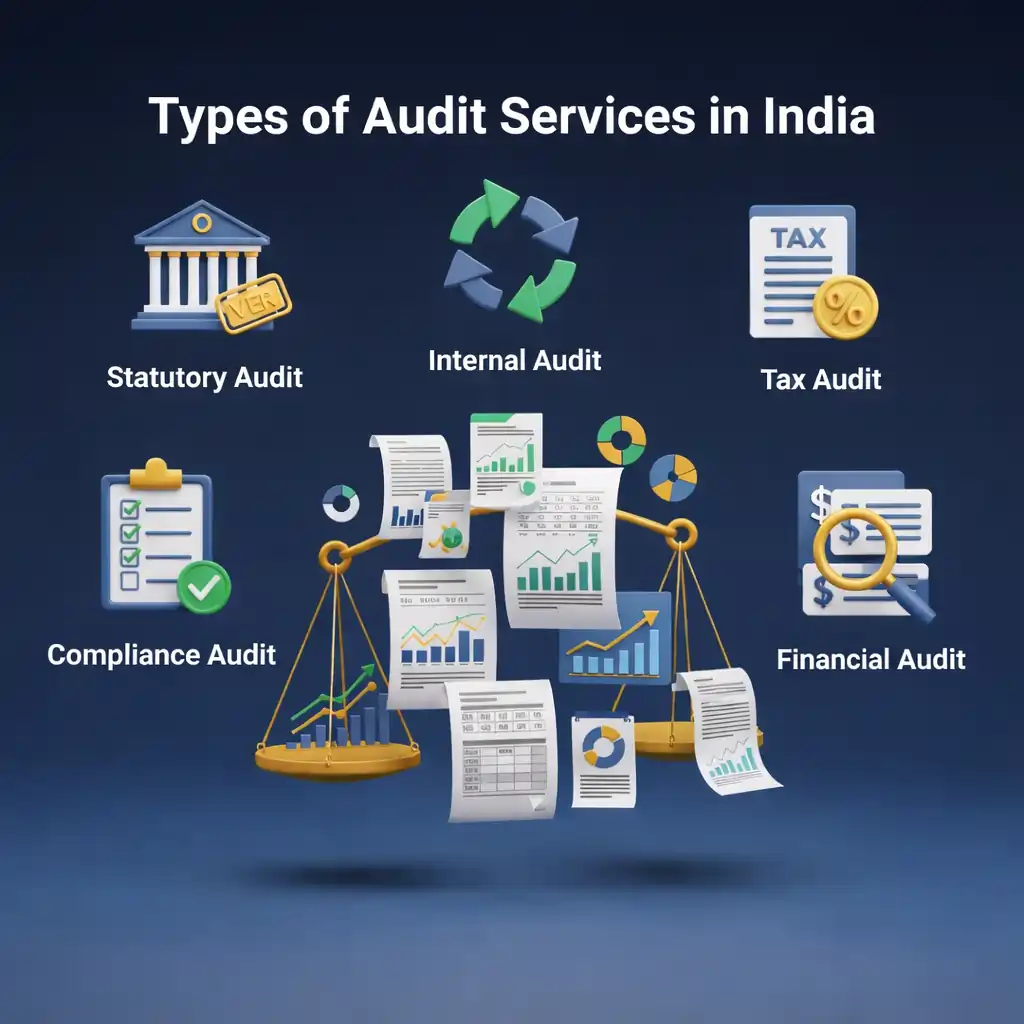
Understanding the types of audit services for companies in India helps businesses stay compliant and manage risks effectively.
Statutory Audit
A statutory audit is a mandatory audit required under the Companies Act 2013.
It involves an independent examination of a company’s financial statements to ensure they comply with legal requirements.
Statutory audits are typically required for:
- private limited companies
- public companies
- certain LLPs
These audits ensure transparency and protect the interests of shareholders.
Internal Audit
Internal audit focuses on evaluating a company’s internal processes and controls.
The goal of internal audit services is to:
- improve operational efficiency
- identify internal risks
- strengthen internal financial controls
Many large organizations conduct internal audits regularly to monitor business operations.
Tax Audit
A tax audit is conducted to ensure that a business complies with income tax laws.
Businesses exceeding certain turnover limits must undergo a tax audit under the Income Tax Act.
Tax audits review:
- income records
- tax calculations
- deductions and compliance
Compliance Audit
Compliance audits evaluate whether a company follows regulatory requirements and internal policies.
These audits help businesses avoid legal issues and maintain proper governance.
Financial Audit
A financial audit reviews the company’s financial statements to ensure accuracy and reliability.
Financial audits focus on:
- financial record
- accounting practices
- transaction accuracy
This type of audit improves financial transparency and ensures proper reporting.
Also Read - What is Bookkeeping and why every business need it? (2026 Guide)
How Does the Audit Process Work for Businesses in India?
Understanding the audit process for businesses in India helps companies prepare better and ensure smooth audits.
The audit process usually involves several steps.
Step 1: Understanding the Business
The auditor first studies the company’s operations, financial structure, and business model.
This helps identify potential financial risks and audit areas.
Step 2: Risk Assessment
During this stage, auditors perform audit risk assessment to identify possible errors or financial misstatements.
Risk analysis helps auditors focus on areas that require detailed review.
Step 3: Financial Document Review
Auditors examine financial records such as:
- invoices
- bank statements
- ledgers
- financial statements
This step ensures that all financial transactions are recorded correctly.
Step 4: Internal Financial Controls Audit
Auditors evaluate internal financial controls to determine whether the company has proper systems to prevent errors or fraud.
Strong internal controls help businesses maintain financial discipline.
Step 5: Audit Report Preparation
After completing the review, the auditor prepares an audit report.
The report highlights:
- financial accuracy
- compliance status
- observations and recommendations
This report follows recognized audit reporting standards in India.
Did You Know?
In India, statutory auditors must follow auditing standards issued by the Institute of Chartered Accountants of India (ICAI). These standards ensure that audits are conducted fairly and professionally.
When Is a Statutory Audit Mandatory for Companies in India?
Many business owners ask whether statutory audits are mandatory.
Under the Companies Act 2013, most companies must conduct a statutory audit every financial year.
Statutory audit requirements include:
- Private limited companies must conduct an annual audit.
- Public companies are required to undergo statutory audits.
- LLPs with turnover above specified limits may also require audits.
These audits ensure that financial statements are accurate and comply with regulatory standards.
Statutory audits are important for maintaining financial discipline and regulatory compliance.
Also Read - Benefits of Hiring an Outsourced Accountant
Who Performs Audit and Assurance Services in India?
In India, chartered accountants are authorized to perform audit and assurance services.
Professional audit services are usually provided by:
- individual chartered accountants
- CA firms
- accounting and consulting firms
These professionals are responsible for evaluating financial records and ensuring compliance with accounting standards.
Qualified auditors follow professional guidelines and maintain independence while conducting audits.
This ensures that audit results remain reliable and unbiased.
How Audit and Assurance Services Help Startups and Small Businesses
Many startups assume audits are only required for large companies. However, audit and assurance services for small businesses are equally important.
Benefits for startups include:
Improved financial discipline
Startups often struggle with financial management. Audits help maintain proper accounting practices.
Better funding opportunities
Investors prefer businesses with audited financial statements because they provide reliable financial data.
Risk management
Audits identify financial and operational risks that may impact the business.
Regulatory compliance
Audits ensure startups follow tax and compliance regulations properly.
For growing businesses, regular audits create a strong financial foundation.
What Are the Benefits of Professional Audit Services for Companies?
Professional business audit services in India offer several advantages for organizations.
1. Improved Financial Transparency
Audits ensure financial records are accurate and transparent.
2. Stronger Internal Controls
Auditors review internal systems and recommend improvements.
3. Fraud Prevention
Regular audits help detect fraudulent activities and financial irregularities.
4. Better Business Decisions
Reliable financial data allows companies to make informed strategic decisions.
5. Increased Stakeholder Confidence
Investors, lenders, and partners trust businesses that maintain audited financial statements.
Overall, audit services strengthen financial governance and accountability.
Also Read - 12A and 80G Registration Services in Bhopal – Complete Guidance for NGOs & Trusts
How to Choose the Right Audit and Assurance Services Provider
Selecting the right audit service provider is important for businesses.
Here are some factors to consider when choosing professional audit services for companies.
Experience and expertise
Choose auditors who have experience working with businesses in your industry.
Understanding of regulations
A good auditor should have strong knowledge of financial laws and compliance requirements.
Professional credibility
Always work with qualified chartered accountants or reputed audit firms.
Transparent communication
Auditors should clearly explain findings and recommendations.
Choosing the right audit partner helps businesses maintain long-term financial stability.
Audit and Assurance Services in Bhopal for Businesses
Businesses operating in Bhopal can benefit from professional audit and assurance services in Bhopal provided by experienced chartered accountants.
Local audit firms help businesses with:
- statutory audit compliance
- tax audit services
- internal audit reviews
- financial advisory support
For startups and small businesses in Bhopal, working with a local CA firm ensures better understanding of regulatory requirements and financial practices.
Professional chartered accountant audit services in Bhopal can help businesses maintain compliance while improving financial management.
Common Questions About Audit and Assurance Services (FAQ)
What is audit and assurance in accounting?
Audit and assurance services involve reviewing financial records and verifying that a company’s financial information is accurate and reliable.
Why do companies need audit services?
Companies need audit services to ensure financial transparency, comply with regulations, and build trust with investors and stakeholders.
What are the types of audit in India?
Common types of audits include statutory audit, internal audit, tax audit, compliance audit, and financial audit.
Is statutory audit mandatory for companies?
Yes, statutory audits are mandatory for most companies under the Companies Act 2013.
How often should a business conduct an audit?
Most companies conduct statutory audits annually, while internal audits may be conducted periodically based on business requirements.
Final Thoughts on Audit and Assurance Services for Businesses
Audit and assurance services play a vital role in maintaining financial transparency, regulatory compliance, and corporate governance for businesses.
Whether a company is a startup, small business, or large corporation, professional audit and assurance services in India help verify financial information and strengthen internal processes.
By conducting regular audits, businesses can reduce financial risks, improve decision making, and build long-term trust with stakeholders.
For companies looking to maintain strong financial management, working with experienced chartered accountants ensures reliable audit processes and compliance with regulatory standards.